9 July 2026 · 3 min read
The Aurelian Walls, and What They Do to Your Taxi Fare
A 1,750-year-old brick wall still decides how much you pay for the ride from the airport. Here is the history, and the practical rule.
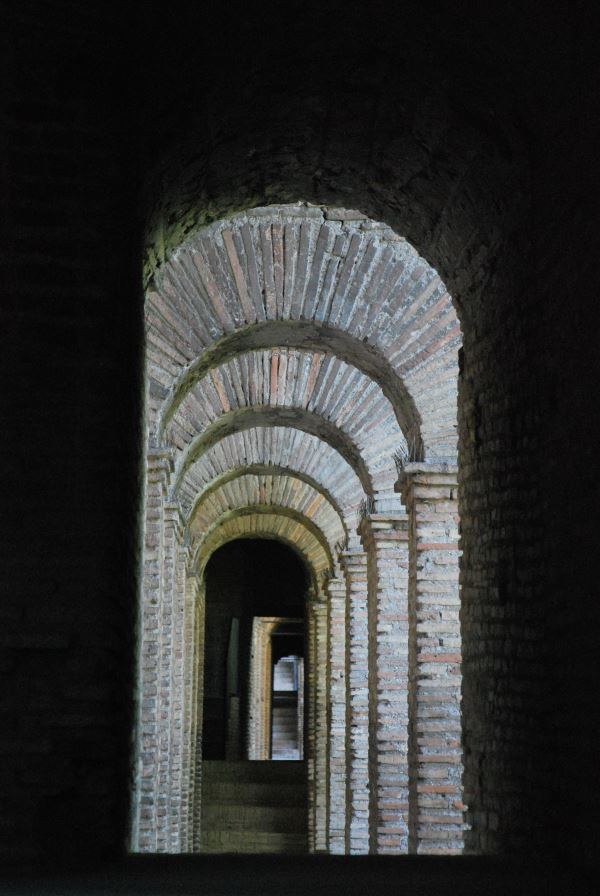
Every city keeps traces of its old defenses. Rome does something better: it still uses them. The Aurelian Walls, begun in 271 AD, are not only one of the largest ancient monuments in the city — they are, to this day, an administrative boundary. If you have ever wondered why your taxi from Fiumicino cost a flat fare while your friend staying two kilometers further paid the meter, the answer is a Roman emperor with a military emergency.
A wall built in a hurry
By the third century, Rome had outgrown its old Republican walls by centuries — the city had been so secure for so long that it simply sprawled, unprotected. Then the empire’s frontiers started cracking, Germanic tribes pushed into northern Italy, and the emperor Aurelian ordered a new circuit in 271 AD. It was finished in just a few years, under his successor Probus: nineteen kilometers of brick-faced concrete, enclosing all seven hills, the Campus Martius and, across the river, Trastevere. Built in a hurry, it recycled whatever stood in its path — which is why a pyramid (the tomb of Caius Cestius, at Porta San Paolo) is embedded in it, along with aqueducts and even an amphitheatre.
The walls worked. Raised and thickened over the centuries, they defended the city for an absurdly long time: the decisive breach came only in 1870, at Porta Pia, when the Italian army took Rome from the Popes. A defensive wall with a sixteen-century service life is a very Roman achievement.
The rule for your cab
Now the practical part. Rome’s taxi regulations set flat fares between the airports and the city center — and “the city center” is defined, officially, as everything inside the Aurelian Walls. From Fiumicino the flat fare is €50; from Ciampino it is €31. Inside the walls, that price is the price: per ride, not per person, luggage included. Outside the walls, the meter runs.
So the question that actually matters when you book a hotel is one no booking site will ask you: is it inside the walls? Trastevere, Monti, Testaccio, the area around Termini — inside. Modern quarters like EUR, or anywhere out along the consular roads — outside, and metered. Some neighborhoods sit right on the seam (Prati and the Vatican area grew up outside the ancient circuit), so if you are staying near the edge, confirm the fare with the driver before the car moves. Any licensed taxi has the tariff card displayed; pointing at it works in every language.
My favorite part of all this: Aurelian built his wall against barbarian raids, and its most consequential modern function is protecting tourists from overcharging. Monuments should all age this usefully.